Thursday, October 29, 2015

Blind Bart and the Luther Rose


Julie Monnard, Zion Lutheran Church
Mark 10:46-52, Reformation Sunday B, October 25, 2015
Grace and peace be unto you from God our Father and our Lord and Savior Jesus Christ, Amen.

In Seminary, I studied this text about blind Bartimaeus for a final project. In addition to the paper, I also had to create some sort of integrative project. I knew that crocheting would take too long, so I decided to paint my learning. 


When Bart cried out, "Jesus, Son of David, have mercy on me!" he was using loaded terms. By calling Jesus "Son of David," he was confessing that he believed all that was told about him in the Old Testament. More specifically, he may have been referencing Psalm 110:1 which is quoted in Mark 12. So, that is what I painted in the speech bubble.

Now, here's the truth: I am not proud of this painting. I wasn't then and I am not now. I don't even want to hang this up in the privacy of my own home.
 
Where's Jesus
A wise pastor friend once taught me that once a canvas has served its purpose, it is time to wipe it clean and start fresh. Some art is not meant to last forever! So, this past week, I did just that. I took this bad painting of blind Bart, painted it white, and started fresh.
 

As I considered what to paint, I thought about blind Bart's confession of faith. If I had to visually confess my faith, what would I use? Well, on this Reformation Day, of course I would use a Luther Rose. Luther put some careful thought into this symbol, and I still stand behind all that it represents. The background is the liturgical calendar. 


Now, I'm still a bad painter. I had more fun figuring out the math of how to get each of the 52 wedges the same size than I did painting it in. I even had to trace the Rose and the Heart! 
This represents for me the cycles of faith and how I experience God in the Lutheran tradition. 
If you had to represent your faith in visual terms, what would you create?


Of camels and needles

Mark 10:17-31, 20th Sunday after Pentecost B, October 11, 2015

Grace and peace be unto you from God our Father and our Lord and Savior Jesus Christ, Amen.

If you don’t feel convicted after listening to this lesson, then you weren’t paying attention. Jesus is speaking some hard words directly to us. Because, let’s be honest, even if you are struggling financially, you are still richer than most of those in this world. Jesus is telling us to sell everything that makes us comfortable and give the money to the poor. 

It is impossible for a rich person to enter heaven just as it is impossible for a camel to fit through the eye of a needle. This statement has made people so uncomfortable over the ages that scholars, pastors, and lay people alike have explained it away. Some have spiritualized it by saying that we don’t really need to sell our possessions. Instead, we need to purge our bad thoughts! When we make this about what goes on inside the individual, then we can easily ignore our homeless brothers and sisters.

Others turned away from spiritualizing the comment. Instead, they want to find a way to get a camel through the eye of a needle. Jesus is using a metaphor to make a statement, so why not make either the camel or the needle metaphorical? For example, some Christians built a small gate in the wall of Jerusalem and called it the eye of a needle. A camel could get through this gate if it was stripped of the loads of stuff it was carrying. Therefore, we don’t need to get rid of all our wealth, just that which is a burden.

More recently, I found a political cartoon on a Google image search which quotes this verse. It shows a camel stuck halfway through a very large needle. A rich man in a top hat watching this distressed camel says, “It’s simple. We’ll buy a bigger needle!” He is hoping to buy his way out of this metaphor and thus completely subverts the point!

Of course, there is the artist who created camels so small that not one but nine camels fit into the eye of a sewing needle. For centuries, rich people have tried to prove Jesus wrong. With each of these examples, it is like we are saying, “Look Jesus! A camel can fit through the eye of a needle. Can I enter heaven now?” I can only imagine Jesus facepalming. 

We don’t get it! Jesus is telling us that it is impossible for us to enter heaven by our own good will. We can’t buy our way into heaven, although the rich man certainly wanted to. Did you notice that in his question? He said, “Good teacher, what must I do to inherit eternal life?” First, he is asking what he can do, implying that he has any authority to earn his way in. Essentially, he thinks God has some massive spreadsheet where God keeps track of everyone’s good and bad deeds. Jesus shows us this isn’t true. 

The second part of the question is specifically about money. The rich man asks about inheriting eternal life. Here, he is referencing the fact that landowners often became wealthy by exploiting the nearby poor landowners. When the poor couldn’t pay back loans tot he wealthy, then the rich could take the poor’s property. It was a way to “inherit” without being a next of kin. This rich man doesn’t just want to earn his way into eternal life, but he wants to buy his way in. How is Jesus supposed to respond to a question that is so off key?

Knowing that this man isn’t ready to hear the truth right away, he eases him in by talking through the commandments. Notice, Jesus never directly states that following the commandments is a prerequisite into eternal life. But they are a way to get closer to God. By following God’s law, this rich man is closer to accepting the good news Jesus has to give.

There is one more step! Clearly, this rich man is relying on his wealth instead of God to get him through life. So, Jesus tells him to sell his possessions and give the money to those in need. That would enable this man to take his focus off himself and put it on another. This is not good news for the rich man, so he went away grieving. He couldn’t bear to stay any longer! He left before he heard the whole story.

I think it is important to note why Jesus said this. Last week, the Pharisees were trying to trick Jesus, so Jesus responded truthfully but harshly. Here, the text says that Jesus loved the rich man. The rich man isn’t trying to trick Jesus; instead he is asking an honest question. Jesus is trying to carefully point this man in the right direction. When he puts his trust in God instead of wealth, then he will be ready to hear the good news. 

When we hear this passage, we often respond either like the people of old who explained away the tough message here, or we also walk away sad and unwilling to hand over our wealth. But not everyone. 

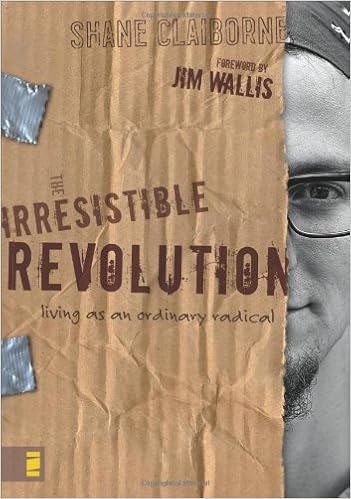
Shane Claiborne is the author of The Irresistible Revolution. In it, he tells of his journey to Calcutta to spend a summer with Mother Teresa. He spent that time helping the sick and homeless have a little dignity in their desperation. He wasn’t the only one serving there, though. He wrote of a man named Andy who worked with him. Shane learned that he used to be a wealthy German businessman until he became a Christian. He took Jesus’ words quite literally. He sold all of his possessions and gave much of it to the poor. Having offered his money to the poor, now he is offering his time and talents. This man made a commitment to the Lord when he agreed to live and work in Calcutta. 


Another example of this was shared at the Why Christian? Conference. Tiffany Thomas is a Baptist pastor in Charlotte, NC. Although she once was on staff at a wealthy congregation, she now serves two poor congregations. Her members live in systemic poverty and face crisis after crisis. Their lives are a mess, yet they always come on Sunday. They need to hear the good news. Offerings at one congregation are only about $200 a week. 

One fall, a local newspaper was interviewing Tiffany. She was talking about the homeless in her neighborhood when she blurted out that her church would be open every night the temperature got below 20. She hadn’t passed that by anybody in her church. She had no plan for how to staff her church to care for these homeless.

Then her janitor stepped up. That entire winter, he slept at the church and let in any homeless who needed a warm place to sleep. That janitor sacrificed so much for the poor.

These are extreme examples, yet I hope you might be inspired to do something extraordinary to follow Jesus’ teaching. Yet even selling everything and giving your money to the poor won’t earn you a place in heaven. Following the commandments won’t earn you eternal life. Even baptism isn’t a free ticket.

So what is Jesus’ good news? He says, “For mortals it is impossible, but not for God; for God all things are possible.”(v. 27) There is nothing that we can do to earn our way into heaven. Nothing. Eternal life is beyond our reach on our own. The good news is that God gifts us with eternal life. God, through the death and resurrection of Jesus Christ, brings us into eternal life. No amount of money, brownie points, or prerequisites can get us there. Only God.


This is the good news. There is nothing that we can do to earn eternal. That is a gift, a gift that we do not deserve, yet a gift that we willingly receive. All that we do is a way to return thanks to God for all that Jesus has done for us. We serve the Lord cheerfully for the grace that Jesus gives to us. Amen.

Divorce wasn't part of God's plan

Mark 10:2-16, 19th Sunday after Pentecost B, October 4, 2015

Grace and peace be unto you from God our Father and our Lord and Savior Jesus Christ, Amen.

I recently read the young adult novel Divergent by Veronica Roth. The main character, Tris, took a test as a teenager to determine what faction she would live in for the rest of her life. The leaders of her city wanted her to fit neatly into their box, yet she didn’t. Her test results showed that she could have fit into multiple factions, marking her Divergent. 

Each time that someone asked her about her test results, she answered truthfully yet differently. When her brother asked right after the test, she said that she wasn’t allowed to talk about it - which is true. Later, after she moved to another faction, her mother found her and asked her test results. Then she said that her results were inconclusive (meaning Divergent), which is true. Towards the end of the book, when the woman hunting Divergents asked of her test results, she said that her result was for her home faction, which is what was manually recorded.

Each time, Tris answered truthfully yet differently. I think that is what Jesus is doing here. The Pharisees are trying to trick Jesus - they want to figure out which faction of Jews he fits into. Jesus can see through their question about divorce, and he answers in a way that does not fit him into a box. Instead of answering directly whether divorce is legal or not, Jesus turns the question on its head. 

Jesus takes a question that is about law and makes it about relationships. Jesus does not state whether a certificate of divorce is legal or not. He does state that God’s original plan was for man and woman to be together forever. Divorce was not part of God’s plan, neither was adultery or homosexuality.


But sin entered the world, so now divorce is a sad reality. The sins that we commit break relationships apart. They separate us from God, and sometimes they force husbands and wives to separate too. Divorce is a sad reality, yet Jesus reminds us of the love that God has for us, from the beginning of creation to today...

Monday, October 19, 2015

Finding Good Christian Resources

When I was learning how to preach in seminary, my professor encouraged us to ask ourselves the question, “Did Jesus have to die for this sermon to be preached?” That means, “Did I proclaim Christ crucified in my sermon? Was my preaching reflective of the theology of the cross?”

These are good questions for us to ask of sermons, yet they also are important to ask when looking for Christian materials. If you are looking for something to read, watch, or listen to that reflects your Lutheran Christian beliefs, you face a steep challenge.

There are Christian resources all over the place, yet most do not reflect our specific beliefs about Christ. Walking through the Christian Family Bookstore or looking at christianbook.com, you will most likely find a lot of evangelical resources. Instead of proclaiming that ONLY CHRIST can save us, many of these other resources say that we can influence our own salvation. Instead of upholding the Bible and the Sacraments as the best ways to experience God, these proclaim personal revelations. Instead of encouraging communal experiences of faith, these almost always emphasize personal relationships.

So, here are some suggestions that I have for finding good Lutheran (or at least mainline) Christian resources:
  • Check out resources from the Evangelical Lutheran Church of America:
  • Borrow from Pastor Julie’s personal library. As long as I know what you have borrowed, you are welcome to borrow anything. Beware, I love to write in my books! Here are some of my favorite authors:
    • Nadia Bolz-Weber. She preaches the gospel in a fresh yet authentically Lutheran way.
    • Rachel Held Evans. She is an Evangelical turned Episcopal; she writes in a light tone as she describes her faith struggles.
    • Rob Bell - A speaker and writer, he has a beautifully simple way of writing about faith.
    • Barbara Brown Taylor - She describes finding faith outside as well as inside the church.
    • Frederick Buechner - He is a theologian and a writer; his prose is poetic in its detail.
    • C. S. Lewis - The author of The Chronicles of Narnia, he also has many Christian books for adults.
    • Henri Nouwen - His simple, short books are pieces of art.
  • To be honest, I am not inspired by most specifically Christian movies available. I find that they do not have the depth of content as more mainstream movies. There are plenty of movies out that have great messages, even if they don't talk about God.
  • I also don't listen to Christian radio. I love storytelling podcasts, including:
There is plenty of other excellent content out there that I haven't seen yet. Let me know what you enjoy!

Thursday, October 8, 2015

Esther and Why Christian?

Esther, 18th Sunday after Pentecost B, September 26, 2015

Grace and peace be unto you from God our Father and our Lord and Savior Jesus Christ, Amen.
Esther is a bold woman of faith. She literally saved the lives of her people, standing up for them when no one else could. She used her political position as Queen of Persia to convince the king that Haman did wrong. Esther is a role model.
Not only were her actions dangerous and honorable, but her words were as well. There are few women in scripture who have more words recorded than Esther. Even the fact that the book is named after her is extraordinary.
Few women throughout religious history have risen to such high esteem. Yet few Jewish or Christian women have become queen without revealing their identity. Esther is a rare case, yet it is the ordinary women who face such large obstacles who are more noteworthy. Most women do not have the power of Queen Esther, yet they also break secular systems to enact justice.
It is stories like these that I heard about last week at the Why Christian? conference. I went because it was hosted by two of my most favorite Christian public figures, Nadia Bolz-Weber and Rachel Held Evans. Yet it was the eleven other speakers who took my breath away. These speakers were vulnerable as they told their stories. They wove their past struggles with deeply held beliefs about God.
These female speakers gave a voice to gay, transgender, black, Asian, and Indian Christians. Most were clergy of various traditions, and a few were laity. Each shared bold stories of faith. Many of them faced situations that were just as life threatening as Queen Esther. Many felt like foreigners in their own churches.
What was so powerful for me was to hear their stories firsthand. I could not do justice to their stories telling them secondhand, so I won’t. At least not yet. Instead, I think it is more important that I respond to the same question that they answered. Which is,
“Why Christian? Why, in the wake of centuries of corruption, hypocrisy, crusades, televangelists, and puppet ministries do we continue to follow Jesus? Why, amidst all the challenges and disappointments, do we still have skin in the game?”
This question is intentionally not, “Why Jesus?” The question is not why do we intellectually believe in God. The question is why we choose to have a relationship with Jesus and the church. Why do we continue to live in Christian community even if the possibility of getting hurt is great?
Well, for me, I haven’t been hurt too much by the church. Yes, I thought I might have to leave my internship site because of problem makers. And yes, I have faced other difficult people in other churches. But the fact of the matter is that I have never been turned away from the church.
Nobody has ever told me that I can't be a pastor because I am a woman. Sure, my young age has been a challenge at times, but you have all grown to respect me. 
So, why do I need the church? Because the church and her institutions are where I get inspired. Nature is nice, but that is not where I experience God. Sometimes, even worship is not where I get inspired. It is the classroom. 
I have been a Lutheran my whole life, but I didn’t learn to love the Bible until college. I didn’t learn to love liturgy until seminary. As each inspiration happens, my challenge is to take the old and make it new. I must take Bible passages, understand them in their original context, and then relate them to our modern lives. 
I am often amazed at how Jesus’ words, though 2,000 years old, still are as countercultural today as they were then. I love studying Old Testament women like Esther and celebrate how they break cultural stereotypes. I also grieve that so many women in the Old Testament are victims of violence.
Even the basic structure of our liturgy goes back to the beginning of the church. Since the beginning of Christianity, worship has used Gathering, Word, Meal, and Sending as the pattern. Yet my challenge is to take these ancient words and make them relevant to you. 
You know that I enjoy taking old things and reviving them for a new generation. I do this with tatting. I take hundred year old patterns, use bright thread and add some beads. Then old boring edgings become vibrant jewelry. Recreating brings me joy, be it with scripture, liturgy, or tatting.
I may not feel like I need Jesus as much as the Why Christian? speakers do, but the fact of the matter is that I want God. I want the Old Testament stories to ring truth today. I want to follow Jesus' teaching. I want to feel God's presence in the classroom and in the sanctuary. I want it all enough that eventually, I do need it to be true. I don't need to have a dark, convoluted past to need Christ. 
This is a messy world that we live in. We are surrounded by violence, hatred, and despair. We see it in the news and on the streets. We hear of family suffering from cancer and fighting losing battles. We know friends struggling with financial crises. With so much to bring us down, only Christ can bring us up.

Only Christ can give us hope that there is something more to look forward to after this life. Only Christ could offer himself to die to show us how to live. Only Christ could love those rejected by society. Only Christ. Amen.

Wednesday, September 23, 2015

Take up your cross!

Mark 8:27-38, 16th Sunday after Pentecost B, September 13, 2015

Grace and peace be unto you from God our Father and our Lord and Savior Jesus Christ, Amen.

Consider Ashley. Ashley comes from a wealthy household. She gets everything she wants and she flaunts it around her high school. To be honest, Ashley is a brat. No matter how many times she attended youth group with her clique, she did not understand what “taking up her cross” should look like. She figured that wearing her diamond studded cross necklace was enough. At school, she still put down her poorer friends. 

Next, look at Jerry. Jerry is a middle-aged white man. He has worked hard his entire life to earn his living. When Jerry hears people proclaim, “Black lives matter,” he doesn’t understand how his white privilege has helped him along the way. His church never talks about racism, so he figures that “taking up his cross” means to remain in a place of power while he helps others.

Finally, there is Anna. Anna is an older woman who honestly is tired. While raising her family, Anna dutifully brought her kids to church. After they left the house, she didn’t have much time before her husband fell ill. She cared for him until he died. Now, Anna is ready to be the one receiving care. She “took up her cross” when she was younger, yet now she has no energy to do so. Although only in her early seventies, Anna is “done.”

When Jesus tells us to take up our cross and follow him, he warns us that there will be consequences. Being Christian is not the popular thing to do. Following Christ is not the easy thing to do - or at least it isn’t when done right. Sometimes we forget how counter cultural Christ’s message was and is.

Just as Peter does in the gospel lesson, too often we set our minds on human things instead of divine things. We get caught up in wealth, or privilege, or our families so that our lives no longer focus on Christ. Even if we attend church every week, we don’t actually take up our crosses unless we bring Christ into the world.

Doing this isn’t always fun or easy, yet it is what Jesus calls us to do. Jesus calls us to reject the world and let the world reject us. Our Christian ethics will never be popular because Jesus tells us to value every human being as an equal, no matter if they are rich or poor, straight or gay, white or black. 

Jesus shows us how to love them - by eating with them, by healing them, by bringing them back into community. Jesus loved the least among us by showing them how great they really are. We can only do this when Christ is the center of our lives. We must let the ethics of the world pass away so that Christ’s love can shine through.

Jesus tells us that “those who lose their life for my sake…will save it.” (Mark 8:35 NRSV) Essentially, Jesus is encouraging his followers to face persecution with bravery. Christians are not facing persecution in America. Some like Kim Davis may think that they can discriminate against others in the name of Jesus, but this is not so! For Jesus cared for all who were ostracized from the world. Discrimination is not the cross that we bear. 

Instead, we together as the ELCA stand up for those who are deemed “less” by our society. We stand with blacks, gays, and the poor. We advocate for them and with them. We learn who they truly are so that they no longer are the “other.” That is the cross that we bear. So how can we help our fellow Christians truly to take up their cross and follow Jesus?

We can approach youth like Ashley and show her how deeply her words can hurt others. We can help her understand how her poor classmates live and the struggles that they face. Maybe Ashley could be inspired to have a drive for jeans at her school. By donating of her wealth and time, Ashley could take up her cross.

We also can talk to people like Jerry. We can bring him into a nearby black community to listen. He can hear stories of how many extra roadblocks black men must surpass before they can be as successful as Jerry. By listening, Jerry can better understand. Then, he and his church could partner with a black church to ensure that their kids don’t grow up segregated. In that way, Jerry is taking up his cross. 

Finally, there are many “Annas” in this congregation and in every congregation. Those who tire of ministry at a young age may not realize that no age is too old to take up your cross. You are never too old to try something new or take a risk. What you do in this place and in the community may change, yet Christ always needs you to serve the church and each other. 

With such risks and challenges in place, why would we be so willing to take up our crosses? Because of who Jesus is. Peter accurately proclaims that Jesus is the Christ, the Messiah, the anointed one. 
Jesus is more than just a prophet. Jesus most certainly is not John the Baptist or Elijah. They were special men, yet they were only human. Jesus is also fully God. Jesus is the savior of the world.

But Jesus was not the grand triumphant king that the Jews expected. Jesus was not some superhero flying in to save the day. Instead, Jesus was - and is - the suffering servant that we hear about in Isaiah. Jesus tells his disciples here that he would undergo suffering, be rejected by all Jewish authority, and then be killed. Jesus would experience physical pain, humiliation, and despair before finally giving up his life.

Then the Lord would bring Jesus back to life on the third day. And so, just as Jesus predicted, this is what happened. This is who Jesus is - our savior who gave up his own life and then rose again so that we can experience a resurrection just like his.


We see glimpses of this resurrection when Christ enables us to lift up the lowly, the downtrodden, and the rejected. This is the cross that Jesus calls us to take up. When we help others, we truly are following Jesus. Amen.

Meaningless or Important?

Mark 7:1-8, 14-15, 21-23, 14th Sunday after Pentecost B, August 30, 2015

Grace and peace be unto you from God our Father and our Lord and Savior Jesus Christ, Amen.

You have heard the phrase, “You are what you eat.” My cousin D, who is in his mid thirties, learned this the hard way this week. While at a ball game, he ate two corn dogs, garlic fries, pork nachos, a hot dog, and a hot chocolate. The next morning, on Facebook he wrote, “it’s interesting: you eat a lot of [junk] food, and then you feel like [junk]. D learned that he can no longer eat like a teenager.
That is a sad reality that most people learn in their thirties. You are what you eat. When you eat healthy food, you feel good. When you eat unhealthy food, you feel bad. But the point of the matter is this: what you eat only impacts you. Well, if you ate a whole Magic Mountain, maybe the people around you might feel a bit uncomfortable too.
For the most part, personal decisions about food only impact the person eating the food. Jesus says, “There is nothing outside of a person that can defile him by going into him. Rather, it is what comes out of a person that defiles him.” (Mark 7:15 NET)
He goes on to say that it is our evil words and deeds that do the most damage. I think a major reason for this is that your words and deeds impact others. You can make a person’s day by saying something nice, yet you can ruin a person’s day by saying something cruel. A corn dog might give you an upset stomach, yet a degrading comment can give someone else an upset heart. 
Here, Jesus is setting priorities. The Jews back then- and even some today - followed strict laws regarding food preparation and consumption. Many foods, like pork and shellfish, were off limits. Others, like dairy and meat, were not allowed to be eaten together. This is why a bacon cheeseburger is the ultimate dietary sin.
A young Jewish man named Moshe recently told his story of this on the Moth podcast. He describes his childhood in an ultra orthodox Jewish community as being like Amish but with electricity. He wasn’t able to read secular books, watch tv, or eat non-Kosher food. His rabbis threatened that the Lord would directly punish him if he disobeyed any of these rules. Because then he would know that the Lord is God. So everyday, Moshe would look over his shoulder wondering if the Lord would smite him.
When he was fifteen, he began to question his orthodox Jewish upbringing, and his parents were going through a rough divorce. So Moshe decided to leave the fold. He went to Long Island to spend some time with his aunt and his brother. But Moshe had only known his orthodox Jewish community, so he wasn’t ready quite yet to break all of his childhood habits. 
When it came time for dinner, Moshe wanted to eat Kosher food, but his aunt’s kitchen was filled with only secular food. So, they hopped into the car and drove around Long Island looking for Kosher restaurants, but they all were closed. Then Moshe suggested getting a Kosher frozen pizza, but even those weren’t available. 
Moshe secretly wanted something not Kosher, but he was too afraid to admit it. Then he came up with a solution: if he didn’t know that it wasn’t Kosher, then maybe he could eat it. So, his aunt went into a pizza place to get him a slice of mushroom pizza. Moshe stayed in the car. The entire time that she was in the pizza shop, Moshe was afraid that the Lord would smite her. He was afraid that his pizza slice would be cut with a knife that had touched pork. He was afraid that something would go wrong.
Then his aunt came out of the shop just fine. They went back to his aunt’s home, and he greatly enjoyed that slice of mushroom pizza. He wouldn’t admit it out loud because he was still afraid that the Lord would smite him. http://themoth.org/posts/episodes/1510
Moshe never returned to the orthodox Jewish community. He learned that he could still be faithful without following every dietary law. Because he could love the Lord while eating a slice of pizza. 
These laws were created for many reasons, one of which was to separate the Jews from their foreign neighbors. During the exile, when the Jews were trying to find out how they could still worship the Lord in a foreign place, they turned to these dietary laws to set them apart from their Gentile neighbors.
In Jesus’ time, this separation from community was no longer necessary. From Jesus’ perspective, dietary restrictions including the washing of hands was adiaphora - or not relevant to salvation. There is nothing wrong with washing hands before a meal - in fact that is good hygiene! We wash our hands today not because God commands us to but because it is common sense.
The Pharisees questioning Jesus were following the letter of the law without considering the spirit of the law. Jews were blindly following dietary restrictions without having their hearts set on God. And that is where Jesus found the problem. What is the point of washing your hands before dinner if you are going to proceed to bully your dining companions?
Jesus reminds us that our words can hurt people more than they will ever share. Our offhand comments can cut deep. Our neglect of others can be the most dangerous. 
So, what can we do? We can help the people of Nepal through our noisy can offering. We can love our neighbors in word and deed. We can feed the hungry through the Salvation Army dinner. We can clothe the naked through donations. We can encourage Princeton’s firefighters and police this Rally Day. We can do the work of God. 
We can do this, not because Jesus commands us to but because Jesus enables us to. We can do this because Jesus gives us the inspiration, the strength, and the encouragement to do so. Thanks be to God! Amen.