Tuesday, June 23, 2015

The Goliaths in our lives

This Sunday, I preached on the Charleston shooting without a manuscript. The following is a sermon illustration that I had planned to use before the shooting happened. To be clear, this is not an entire sermon. It is simply a story. How would you conclude this story?

Sharon left her doctor’s appointment grief stricken. She had just received the worst news possible: stage IV cancer. She sat in her car in the parking lot, her hands shaking against the steering wheel. Tears streamed down her face as she cried. Realizing that she was not safe to drive all the way home, she decided to go to her son’s house instead.
Only going a few blocks, Sharon arrived safely. She shuddered as she walked to the back door. She tried the handle - it was unlocked. She walked in slowly, tears continuing to stream down her face. As she entered the kitchen, she saw her son George leaning over a table strewn with papers. He had his head in his hands. As Sharon went closer, she discovered that the papers were student loan documents and mortgage bills. 
Her own anxiety set aside, Sharon said, “George, honey, are you ok?”
Not realizing she was there, George jumped out of his chair.
Catching his breath, he said, “Oh, hi Mom. I’ve been better. I’m swamped in debt and I can’t seem to find a way out. How am I supposed to have a house big enough for my expanding family if my student loans are ruling my life?” 
Then really looking at his mom, he said, “Are you ok?”
“I’ve been better,” Sharon replied, “I just came from the doctor.”
“Bad news?” George asked.
“Stage IV. They won’t tell me anything more than that, but it doesn’t look good. I’m scared, honey!” Then Sharon fell into her son’s arms and sobbed. They remained like that for some time until George’s daughter Jamie walked in.
Both Sharon and George looked down in astonishment. Jamie was wearing a Superman t-shirt, and her hair was in shambles. Her usually long, beautiful locks were now ragged and short. It looked like she had tried to cut her own hair.
“Jamie,” Sharon said, “what have you done with your beautiful hair?”
“Not beautiful,” Jamie replied, “Beautiful is for girls. I want to be a boy!”
“A boy?!” George exclaimed. “Are you jealous of your little brother?”


“No!” Jamie shouted, “I am a boy! I don’t want to be a girl.”

Tuesday, June 2, 2015

The Challenges of God's Calling

Isaiah 6:1-8, Holy Trinity B, May 31, 2015

Grace and peace be unto you from God our Father and our Lord and Savior Jesus Christ, Amen.

Our Unworthiness
In our first lesson, we see the vision that the Lord showed to Isaiah. The glory of the Lord fills the Temple, and the seraphim are calling out their praises. The whole place is trembling. Yet amid all this holy beauty stands Isaiah. He is just a simple man. He does not feel worthy to be there in the Lord’s presence.

Isaiah - one of the most prominent prophets of all time - does not feel worthy to be receiving this vision. How often do we too not feel worthy! Some important Christians also have had moments like these. 


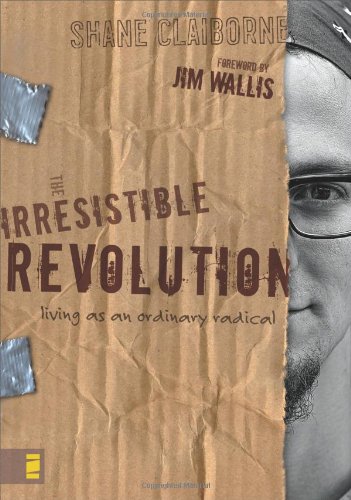
First, consider Shane Claiborne, the author of The Irresistible Revolution. Early on in his career, Shane decided that he wanted to meet and work with Mother Teresa. He wrote her a letter that essentially said, “Dear Mother Teresa, we don’t know if you give internships out there in Calcutta, but we would love to come check things out.” (p. 73) 

He wrote about his ideas of what the church can look like. All of Shane’s friends and colleagues hearing of this letter exclaimed, “You are writing who?!” People did not think Shane was worthy to write to Mother Teresa. Even he was unsure if he should be doing it. He wanted to see Calcutta, yet he wondered if he was worthy.


Next, consider the Baptist minister Jeffrey Brown. His first church was in Boston. He had great aspirations to become a megachurch pastor, yet that never happened. He was too busy leading funerals for black teenagers caught in the violence in the streets of Boston. As other churches moved out of the city to avoid the violence, Pastor Brown tried to offer social services for these teens. Yet, nothing helped.

Then a young black man was shot near the church. As this man was running to reach the safety of the church, he collapsed and died. There was nobody at the church to help him anyway. It was at that time that Pastor Brown realized that he needed to take drastic steps to reduce the violence in his city. As he feared what might happen to him, he prayed to God and asked, 
"Why me? Why do you want me to do this?" 

The Grace of God's Blessing
We all have times when we feel unworthy. How can we come before the Lord who created the world and not feel unworthy? Yet Isaiah’s story doesn’t end with his cry that his lips are unclean. One of the angels in Isaiah’s vision brings a live coal and touches his lips. This is a ritualized way of clearing Isaiah of the guilt of his sin. Now that his lips are clean, he is able to hear the Lord cry out, “Whom shall I send and who will go for us?” and Isaiah replies, “Here am I; send me!” (Isaiah 6:8-9)

So, the Lord who is greater, more mysterious, and more beautiful than we can imagine chooses us to serve. We can’t even look at the Lord’s face, yet the Lord sends us out to prophecy. Just as the Lord sent a live coal to clean Isaiah’s lips, so also the Lord sends affirmation to us.

Consider Shane Claiborne. He waited for Mother Teresa to reply to his letter. Eventually, he got her phone number and called her. Amazingly, Mother Teresa answered! After mumbling through who he was and why he wanted to visit, he said that he would like to stay for the summer, but a few weeks or even days would work, too. 

Then Mother Teresa replied, “Come for the summer. Come.” Shane then asked her were he would eat and sleep? She responded, “God takes care of the lilies and the sparrows, and God will take care of you. Just come.” (p. 74-5) Shane was so nervous he could barely speak, yet Mother Teresa exuded God’s grace and invited him to come.

Next, Jeffrey Brown. Pastor Brown began to walk the streets at night to see for himself what it was like for these gang members and drug dealers. Yet, he couldn't change anything on his own. God affirmed his needs by sending the other clergy in town to walk with him. He and these clergy walked the streets in the most dangerous neighborhoods from 10 p.m. to 3 a.m. each weekend. The violent youth eventually agreed to talk with them. 

These youth showed Pastor Brown and his colleagues that they were not hard hearted but simply were trying to make it. The pastors came to value these youth and no longer saw them as a problem to be solved. Life-changing ministry was happening right there on the streets of Boston.

The Hard Work of Ministry
When we feel at our weakest, the good Lord is often there to bring us to our feet, brush off the dust, and send us on our way. The Lord sends us out to do the Lord’s work, yet it isn’t always easy. Certainly Isaiah’s message was hard to share.

Our lesson today ends before we hear the prophecy that the Lord gives to Isaiah. He is to share with the Israelites this message: “Close off all your senses lest you try to repent. The Lord will send you all away after letting your land be destroyed. Even if some of you try to stay in your land, the Lord will let every little bit be demolished.” (Isaiah 6:9-13, summarized)

No wonder why some prophets run away from the Lord. This is no easy task. Isaiah must proclaim to his people that they will watch their beloved holy land be brought to ruin. Sharing such disturbing news must have been exhausting.

So also, the ministries that we are called to are not easy. The Lord sends us to the people who make us the most uncomfortable, and then the Lord tells us to love them. That is exactly what Shane Claiborne did. While he was in Calcutta, he spent every morning in an orphanage. He cared for disabled children who were abandoned by their parents. 

Then every afternoon he worked in the Home for the Destitute and Dying. He helped the people there to die with dignity by providing comfort care. Shane followed Mother Teresa’s example as he followed Jesus’ teaching. Shane did not have an easy time caring for abandoned children and those dying on the streets, yet he did the Lord’s work with grace. A grace only the Lord can provide. 

So also, Jeffrey Brown worked with violent youth that others considered a lost cause. Pastor Brown and his colleagues sat down with these youth and with some of the local police force. Together, these three groups of people who normally never valued each other worked for a common goal. Instead of simply sending in more cops or providing more social services, the community listened to the needs of the youth.

Conclusion
We may be unworthy to see the Lord’s face, yet even Isaiah was able to see the hem of the Lord’s robe. Despite our sinfulness, and despite our failures, the Lord calls us to great tasks of mercy. The Lord calls us to form relationships with the least among us. We can follow the Lord’s calling - with God the Father to guide us, Christ to redeem us, and the Holy Spirit to strengthen us. Amen.

The Spirit is Moving Among Us

Acts 2:1-21, Pentecost B, May 24, 2015


Grace and peace be unto you from God our Father and our Lord and Savior Jesus Christ, Amen.

The Uncertainty of a Foreign Place
During May Term 2007, I went with Dr. K and a group of fellow Wartburg College students to visit Germany. For three weeks, we toured all of the Reformation sites. We walked in Martin Luther’s footsteps as we remembered all that he accomplished there. We also spoke with people from former East Germany who shared the great challenges that they faced everyday under Soviet rule. We also discovered what the Lutheran church looks like in Germany today.

This trip was only my second time overseas. On the plane ride, we all were nervous and excited. We wondered what Germany would be like. None of us spoke German, and we hoped that would not detract from our experience. We were ready to go exploring!

Then we walked off the plane in Berlin and onto the terminal. The complete foreignness of the place felt like a slap in the face. Most of the signs and posters were completely in German; I couldn’t read a word. The few signs that did have English only had it in small print, almost as an afterthought. All of the people around me were speaking German or other foreign languages. I didn’t understand any of them, and I didn’t know where to go. I was completely out of my element and felt quite uncomfortable.

So, I stayed close to my group. Dr. K carefully helped us navigate our way through the airport to our bus. We drove through the city, gazing at all that we could see. Berlin was such an odd mix of beautiful and drab. Along the way, we picked up our tour guide who happened to be named Christian. When he stepped onto the bus, we didn’t know what to think of him. We were struck by how tall he was. He could have been quite a menacing figure. We knew that the quality of our entire time in Germany was focused on this one man. 

Then Christian opened his mouth, and he spoke perfect English. We all let out a breath of relief. Not only did Christian speak English, but he also cracked some jokes and put us at ease. He truly made our three weeks in Germany a delight. He challenged us to look at the Reformation in a new light. Overall, Christian helped us to appreciate his beautiful country and the people therein.

As I experienced during that class in Germany, there is something truly refreshing about hearing your own language in a foreign place. It is that relief of hearing your own language that I find inspiring in the story of Pentecost. Jerusalem was - and is - a metropolis of Jews from all over the world. They may have shared the same faith, but these Jews spoke the language of their native countries. 

The Uncertainty of Pentecost for the Disciples
These Jews were minding their own business in Jerusalem, visiting the Temple and other holy places. They also did not speak the language, yet they hoped that would not detract from their visit. Then they hear a ruckus happening inside a home, and they wonder what is going on! Curious, the Jews start to crowd around this little place. Then the disciples spew out of the front door. 

They are all speaking different languages! The disciples were preaching in languages they hadn’t known an hour before! What a delight it must have been for these foreign Jews to hear someone speaking their language. Immediately there must have been some bond formed. Simply hearing their own tongue in a foreign place must have opened them up to receive the gospel. They were able to believe everything they heard about Jesus because of this powerful gift from the Holy Spirit.

In our time and place, we don’t need the Holy Spirit to give us the gift of language. Pretty much everyone we know speaks English. Yet, for someone who has rejected the church or who has never been to church, sharing the good news with them can be a challenge. 

We can say, “Jesus died so that your sins may be forgiven. You can live forever because of the cross!” Yet those words fall flat. Listeners may not know what sins are or why they need to be forgiven. They may have no desire to live forever. Even if we strip away all of the Christian lingo, the very concept of who Jesus is and what he did for us can be completely foreign. 

Sometimes, we can’t evangelize using words. Sometimes, we need to show the good news through our actions. Even St. Francis supposedly said, “Preach the gospel, and if necessary, use words.”

Confirmation Blessing
The confirmation students have shared with me that you are not allowed to talk about faith in school. You are not able to use the gift of words to share the good news of Jesus Christ. So, I encourage you to take St. Francis' words to heart. Show your classmates who Jesus is through the language of your actions.

Whenever you lift the spirits of a classmate who is down,
whenever you lead a food drive or charity fundraiser,
whenever you are kind to a disabled classmate,
whenever you follow Jesus' example at all,
you are showing your classmates who Jesus is.

Junior high and high school can be tough. Emotions are heightened, classes are challenging, and friendships are hard to maintain. With the Holy Spirits help, you can brighten the lives of your peers. You have a wonderful opportunity to be Christ's hands and feet. We all can do the same, no matter what the context we find ourselves in.


We can show Christ's love to our classmates and colleagues because the Holy Spirit enables us to. We pray that the Holy Spirit might descend on us like tongues of fire. We pray that the Holy Spirit might inspire us to know what language of action we can use to make our community a little better. Amen. 

Monday, May 18, 2015

The Big Four

1 John 5:9-13, Easter 7 B, May 17, 2015
Grace and peace be unto you from God our Father and our Lord and Savior Jesus Christ, Amen.

Have you heard the poem by Linda Ellis titled, "The Dash"? You probably have. It is commonly used at funerals and visitations to celebrate a life lived well. The narrator of this poem considers a tombstone, including the person's birthdate, deathdate, and the dash in between. Here are three lines from the poem:

"He said what mattered most was the dash between those years. 
For that dash represents all the time they spent alive on earth. 
And now only those who loved them know what that little line is worth."

"The Dash" is a powerful reminder of the importance of our lives and how we live them. When we grieve for a life ended, we are reminded how precious our few years on this earth can be. We will be remembered by our dash. Ultimately, our birth and death dates don't matter much. It is the time between that matters.

Yet when we look at Jesus, we see that his dates matter more than his dash. We will spend the entire second half of the liturgical year considering that dash. We will read about his ministry, including the lessons that he taught, the sermons that he preached, the miracles that he performed, and the people that he healed.

Jesus had an amazing dash, and we need six months every year to learn from him and follow his example. But Jesus doesn't give us eternal life primarily because of the life that he lived. Those dates surrounding the dash are what matter. 

If you think about it, Jesus has two dashes representing his time here on earth. Jesus doesn't have a tombstone, yet I wonder what his would look like? Would it say:

Christmas Day dash Good Friday
Easter Day dash Ascension Day

Jesus has four important dates marking his life, not the two that we have. These four dates have encompassed the first six months of the liturgical year. We started our retelling of Jesus' story last November when Advent began. We waited - a bit impatiently - for Christ to be born. 

Then all too soon Lent came when we were preparing for his death. We grieved for Christ, only to celebrate on Easter morning. Then Jesus remained on earth resurrected for some time before he ascended into heaven. This past Thursday was the official feast day to celebrate Jesus' ascension. 

We take six months of every year to relive Christ's life and giving of life. These events from over two thousand years ago are so important that we recall every last detail. We act it out. We sing about it. We cherish these beloved stories. 

These four moments in Christ's life need to be held together to comprise his saving act. We have eternal life not just because of Jesus' life or even his death. We have eternal life because of all four of his dates surrounding those dashes. 

In 1 John, we heard this morning: "This is the testimony: God gave us eternal life, and this life is in his Son." So, God gives us life eternal because of Jesus' birth, death, resurrection, and ascension.

Just as Jesus' life didn't end at his death, so also our lives won't either. After we leave this earth, we will remain with God forever. Our eternal life doesn't begin at our death, though. We experience a better life now because of what God did for us through Jesus Christ. For eternal life does not just mean never-ending. It also represents the quality of life that we experience now because of Christ. 

We have a special opportunity right here and now. We can help each other experience this quality of life. Whenever we show God's love to each other, we are sharing eternal life. Whenever we help our neighbors, whenever we receive communion, whenever we brighten someone's day, we are helping others - and we as well - experience eternal life. Right here. Right now.

So this brings be back to that poem titled "The Dash." It concludes by encouraging us to live our lives well. Listen to these verses:
For you never know how much time is left, that can still be rearranged...
If we could just slow down enough to consider what's true and real
And always try to understand how people feel...
If we treat each other with respect and more often wear a smile,
Remembering that this special dash might only last a little while.

This poem describes well what it means to experience eternal life on earth, but it doesn't express why. This poem beautifully encourages us to experience the quality of life that we find in Christ and to share that with others. But we can only do this because Christ enables us to. We can only experience and share this eternal life because Christ was born, died, was raised, and has ascended into heaven. 


One day we will be united with Christ in a way that we cannot imagine. For now, we will enjoy this life that we have together. We will celebrate all four of the dates in Christ's life and the dashes in between. Amen.

Tuesday, May 5, 2015

Peace for Baltimore

John 15:1-8, Easter 5 B, May 3, 2015

Grace and peace be unto you from God our Father and from our Lord and Savior Jesus Christ, Amen.

A few weeks ago, I attended the Breathe clergy event sponsored by our synod. It was meant to be a time of renewal after the stresses of Lent. Yet, that event was not relaxing for me. It all started when I received misinformation. Thus, I started in the wrong frame of mind. 

Because so many of my closest colleagues were not in attendance, all of my conversations were superficial. More often than not, I kept to myself, tatting out of the way. Despite our synod’s best efforts, I did not feel that event was a safe place for me to genuinely express my joys and concerns of ministry.

Then this past week I was at a different synod event. This one was the First Call Spring Gathering. Instead of a conference center, we were at a Christian camp far away from the stresses of home. Five experienced pastors led about ten of us first call pastors in valuable dialogue. 

What struck me most was that this was a safe place to be myself. The committee pastors confessed some of their mistakes and failures, opening up the safe space for us to express our challenges without judgment. We established from the beginning that the entire retreat would be confidential.


Some conversations are relatively safe no matter where you are. We all can talk about the earthquake in Nepal without worrying about others’ reactions. The earthquake has caused a terrible tragedy where thousands of people have lost their lives. Experts from around the world are helping the people of Nepal recover. 

Yet so many of our interactions are much more like the first event where it is not safe to express genuine opinions. In our daily lives, we often encounter groups of people who are quick to judge. So, we keep our true thoughts to ourselves or we jump in and fight. Everyone has their own opinion - why do so many have to shout it so loud? 

This past week, Facebook has not been a safe place for me. Everyone has something to say about Baltimore. Each person thinks they know what is the truth when in reality anything they know is biased and terribly manipulated. Only one of my friends has participated in the peaceful protests in Baltimore. All the rest are judging from afar.

After returning from my retreat, I have spent a lot of time watching videos and reading articles from a variety of sources. I have tried to get a rounded view of the events unfolding in Baltimore. I have tried to decipher between those who are rudely shouting their opinions and those who are sincerely confessing their true experience. The fact of the matter is that everyone thinks the other is wrong. That is no place to start an honest dialogue.


That is what I think the poorest of Baltimore are yearning for - honest conversations about the hardships that they experience every day. There are pockets of people in Baltimore who feel they are being oppressed. Without enough jobs or opportunities, the poor of Baltimore feel hopelessness and despair. 

They want to be heard. They want to be valued. They want to be treated with respect. Isn’t that what we all want?


So here we are half a country away from Baltimore and half a world away from Nepal. We are in a completely different context. How can we relate to these strange people in a strange land? We turn to the good news.

Jesus tells us that God the Father is the gardener, and Jesus is the vine. We are the branches. God tends us so that we bear good, plentiful fruit. We can only bear this fruit when we are connected with Jesus. Jesus is our source of life. In a way, Jesus is saying that we can only do ministry and other good works because Jesus gives us the ability and encouragement to do so.

Jesus is our connection to the people of Baltimore and Nepal. Jesus gives us the ability to do miracles, and Jesus is empowering the peaceful protestors in Baltimore and the survivors in Nepal. Jesus is there, just as Jesus is here. 

From afar, we can admire how the people of Baltimore are cleaning up the terrible mess that their own foolish have created. For every terrible story that comes out of Baltimore, there is another that gives us hope. 

From afar, we can financially support the people of Nepal. Lutheran World Relief is already there, and our support can pay for medical kits, tents, and clean water. Yet most importantly, we can have tough conversations about race and poverty in our own area. We may not be able to make a big difference in Baltimore or Nepal, yet our conversations around these big issues of race and poverty can lead us and our communities away from despair and hopelessness.

In her Lutheran article titled, “We Need to Talk,” Presiding Bishop Elizabeth Eaton writes, “Not talking about it won’t make it go away. Some might argue that the church is no place for such a ‘political’ issue, that we should be concerned with the spiritual, not the temporal. But I’m convinced that not only is the church the appropriate place for this conversation, it might be the only place where the deep, honest, even painful conversation about race can take place so people feel they have been heard, and change and healing can happen.” (Feb. 2015 Lutheran, p. 50)

So, after this worship has ended, I invite you all to talk about the greater issues in our American culture that has led to the protests and riots in Baltimore. But first, I invite you outside our back door. The Delaware-Maryland Synod has requested that we spend time outside our walls for silence and prayer. I will take a picture and send it to our fellow Lutherans in Maryland to show that we too pray for peace in Baltimore.


Then I invite you back inside for fellowship. Over your coffee and treats, I pray that you have kind, fruitful conversations about what is happening here and elsewhere. I pray that you find ways to listen to each other so that each of us may be heard. Claim your own experiences and don’t pass judgment on others. These conversations are the first step to true peace. May Christ be with you, nurturing the fruit of your discussion. Amen.

God's love is ours to give

1 John 3:16-24, Easter 4 B, April 26, 2015

Grace and peace be unto you from God our Father and from our Lord and Savior Jesus Christ, Amen.

“Let us love one another.” This is a phrase that we hear so often in scripture especially from the gospel according to John and the epistles from John. We hear so frequently that God is love, that we are to love our neighbors, and to love ourselves. What does that love look like?

To be alone is to be lonely
The following are a few short stories that show unique ways how one person showed God’s love to another, not in word or speech, but in truth and action. The first story goes back to an article in the Gather magazine (from March 2013). The author tells a story from when she was a young mother. She had a daughter who at the time was about five. 

She tells what starts as a simple, ordinary story. She is cleaning her house, going about from room to room. She is picking up toys and doing laundry, dusting and vacuuming. Every step of the way, her daughter is there beside her. Her daughter is mostly minding her own business, but always nearby. 

Then, while the mother is cleaning in the kitchen, the daughter sits down on the floor with her dolls. The mother gently encourages her daughter to go play elsewhere, but her daughter responds, “But Mom, I cant. I don’t want you to be lonely!” 

So that was why her daughter was following her around. That simple-minded five year old could not bear for her mother to be alone, for in her mind, to be alone is to be lonely. That little girl showed God’s love to her mother by simply being there.

A cake of empathy
The second story is from my internship supervisor. PF and his wife had two pets, a dog and a black cat named Midnight. This Midnight wasn’t fond of strangers, yet he was fond of Fred.

One evening, PF saw that Midnight was acting strange, almost as if he was having seizures. So, his wife drove to the veterinarian as PF held his beloved cat in his lap. Midnight died there in the car in Fred’s arms before they arrived at the vet.

PF was terribly upset at the loss of his cat. He didn’t show it at church, yet everyone knew how much he loved his pets. Many people shared their sympathy and sent cards. There was one gesture of support that stood out, though. Kathy, one of his parishioners, showed up to his house a few days later with a cake, beautifully frosted and dotted with cherries. 

You see, Kathy wasn’t the best at using words to share her feelings, but she was a baker. Her gift of cake was her most genuine way to show her sympathy. She didn’t want to give the usual casserole or salad. When someone is in distress, we share what we can do best. For Kathy, that was cake. PF was awestruck by this beautiful symbol of sympathy. Kathy shared God’s love with PF by sharing her spiritual gift of baking.

Toys of friendship
The third story comes from a podcast that I heard a while ago. The speaker, let’s call her Grace, told the story of a friend that she had in grade school. This friend was from Japan and continued many of the traditions that her parents learned overseas. So, when Grace eventually had to move away, her friend gave her a parting gift. 

It was a wooden apple that opened up to reveal a tea set small enough to work in a doll house. Now the apple was scratched in a few places, and the little table was missing a leg. It was clearly second hand. Unsure what to think, Grace looked up at her friend. 

Then her friend said, “In my culture, we do not give away new toys. Instead, we share our favorite toys. I have loved this apple tea set for most of my life. I have spent hours playing with it. Now I would like for you to have it. Think of me when you play with it.” So, Grace cherished that little apple play set for many years to come. She then passed it along to a younger friend who could appreciate such a marvelous gift. 

This simple gift is a powerful way to share God’s love in truth and action. She didn’t just give away her favorite toy, knowing that she would never see it again. In a way, she gave part of herself to Grace with that toy. 

HGTV healing
We don’t always show God’s love to those we cherish. Sometimes, we are called to share God’s love in action and truth to those we don’t know at all. This fourth story comes from a photo on the internet. The photo is of a young(ish) man pulling down the collar of his dress shirt to reveal a scar along the bottom of his neck.

The caption of this photo describes how this man came to have this scar. A registered nurse in her free time was watching HGTV. She noticed that this man, the host of that show had an unusual lump at the base of his throat. From her experience, she knew that this gentleman had a tumor on his thyroid.

Even though she did not know this man personally, she wrote to that HGTV show’s production company. They shared that nurse’s message with the host. After reading her letter, he went to his doctor, where he learned that he had thyroid cancer. As soon as he could, he had his thyroid removed. Now he is cancer free. Who knows how far his cancer would have progressed if this good samaritan hadn’t told him to go to his doctor? 

This is the perfect example of loving one another in truth and action. That woman did not have to write that letter. She was under no obligation. Yet she went out of her way to care for this stranger. And what a blessing she became for him.

Conclusion
These are all simple stories of regular people doing seemingly ordinary things. A daughter keeps her mother company. A parishioner shares cake with her pastor. A friend gives away one of her toys. A woman writes a letter to her favorite TV show. 

In each of these cases, we see how these ordinary actions become extraordinary to those who receive them. The mother is touched by her daughter’s care. A grieving pastor is flabbergasted by how his church family cares for him. A young girl remembers her best friend every time she plays with that toy. A young man is cured of cancer thanks to one small letter.

This is how we can love each other in truth and action. Sometimes our most ordinary actions can show how deeply we care for one another. When we care for those dearest to us and for those who are complete strangers, God shines through us. On this day, and in the week to come, may you realize how your smallest of actions can make a world of difference. Amen. 


Monday, April 20, 2015

Is s/he faking it?

Luke 24:36b-48, Easter 3 B, April 19, 2015

Grace and peace be unto you from God our Father and from our Lord and Savior Jesus Christ, Amen.

My Grandma in 2007.

When I was on vacation, I went with my father to visit my grandmother. When we walked into the memory care unit of the nursing home, we entered a large room. It was full of chairs and couches, and a few residents were scattered among these seats. There was a large - and loud! - television above the fireplace. 

These residents were all facing the TV, but it was clear that they were not really engaging with the TV. They certainly weren’t engaging with each other either. In a sense, they were faking it - they were pretending to watch the television. For all they were doing, they could have been staring at a blank wall.

My grandmother was among them. She wasn’t any more focused than anyone else. So my father and I sat on the couch with her. Now, it was the day after the tornados went through Iowa and Illinois. As part of conversation, I asked her, “Grandma, did you hear the terrible thunderstorm yesterday?” And with a blank face, my grandmother said, “Um…yes.” It was clear to me that my grandmother most certainly did not remember the storms that went on for hours.

Then my father said, “The storms were so bad that my office lost power. Grandma, did you lose power?” Her face still blank, she said, “Um…no.” Once again, it was clear to me that my grandmother did not remember at all. She was faking it. She didn’t remember anything, but she was asked a yes or no question. She could chose “yes” or “no,” and this time she happened to guess correctly.

Then we went to visit my dad’s Aunt Rose. Aunt Rose is long past the stage of faking it. She was calling out for her parents, her brother, and her husband, who all are deceased. Aunt Rose was ready to die.

After spending some time with Aunt Rose, we went back to visit with my grandmother, now in her room. We tried to chat with her for a while. Then a staff person walked in with her nightly pills. She introduced herself, “Hi Clara, my name is Sophie.” My grandmother decided then to introduce her visitors. She pointed to my father and said, “This is my son Jim.” (Which is correct.) Then she pointed to me and said, “This is…Linda.”

My heart broke a little. Not only did my grandmother get my name wrong, but she called me by my step mother’s name. My grandmother had been faking it well until this point. But in this moment she proved that she didn’t have it all together. 

We all have seen these signs of aging in the people whom we love. Especially when our loved ones have dementia, they slowly lose control of their minds. On the outside, they may look like they have it all under control, but on the inside, they are a mess. They are faking it.

Now let us look at the gospel lesson. When the disciples see Jesus, they aren’t sure if they believe he is really there. They wonder if Jesus is faking it. They saw him die. Is Jesus faking being alive? To prove it to them, Jesus shows his hands and his feet. The disciples see the marks of his crucifixion not as open wounds but as scars. Somehow, Jesus was not faking it. Jesus was alive.

But then the disciples wonder, “Is he still human?” Jesus was acting a little different, a little weird. He may be alive, but in what form? So Jesus did the most human, earthly thing - he ate with them. They cooked up some fish, and he ate. And this wasn’t like the ghostly trio in the Casper movie who gobbled up food just for the food to fall immediately to the floor. Jesus ate like a regular human. Jesus was not faking it.

Then the disciples wonder, “He may be alive and human, but is he God? Before, Jesus could do things that no one else could.” So, Jesus “opened their minds to understand the scriptures” (Luke 24:45). Jesus revealed to them in moments what would have taken hours to teach and preach. Jesus showed them who he was and how he fit into God’s larger story. In that moment, in how he showed them and in what he showed them, the disciples knew that Jesus is God. Jesus most certainly was not faking that.

Jesus then tells them, “You are witnesses of these things.” And so they were. They shared their story with everyone they met. They even recorded their stories in scripture. 

We also are witnesses of these things. We read Jesus’ story in the Bible. We listen to it proclaimed. We witness Jesus in baptism and in communion. Yet we experience Christ outside of worship, too. We witness Christ in each other. 

Even when I was visiting with my grandmother, I saw Christ there. Christ was present the few times that I could see the spark of her soul still alive inside her. Yet most of all, Christ was alive among us making that visit holy, that awkward visit between grandmother, son, and granddaughter. And when my grandmother eventually passes away, Christ will be with her then too.


We are witnesses of these things. We witness the holy in the ordinary. We witness Christ among us in church and outside church. We witness Christ in our blessings and in our challenges. Our charge is then to share our story of the good news with others. May Christ give you the courage to do so. In Jesus’ name, Amen.